
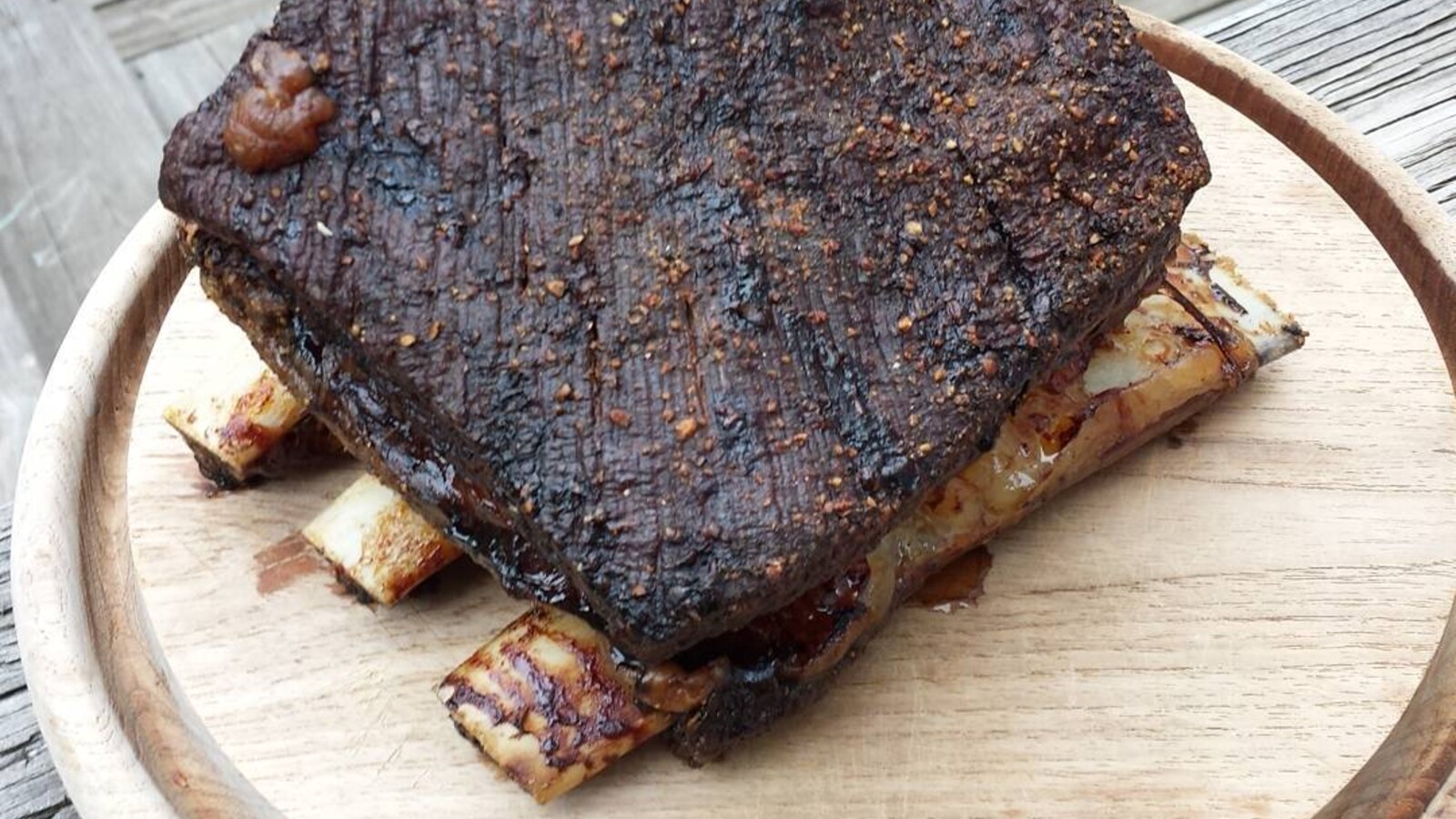
The original post saved the most important details: it was a beef short-rib plate, cooked “slow and low” for 10 hours, and it came out great on the first try. It did not preserve exact quantities or smoker settings, so the measured recipe below is our dependable reconstruction of that cook—not a claim that every detail was written down in 2016.
Why this simple method works
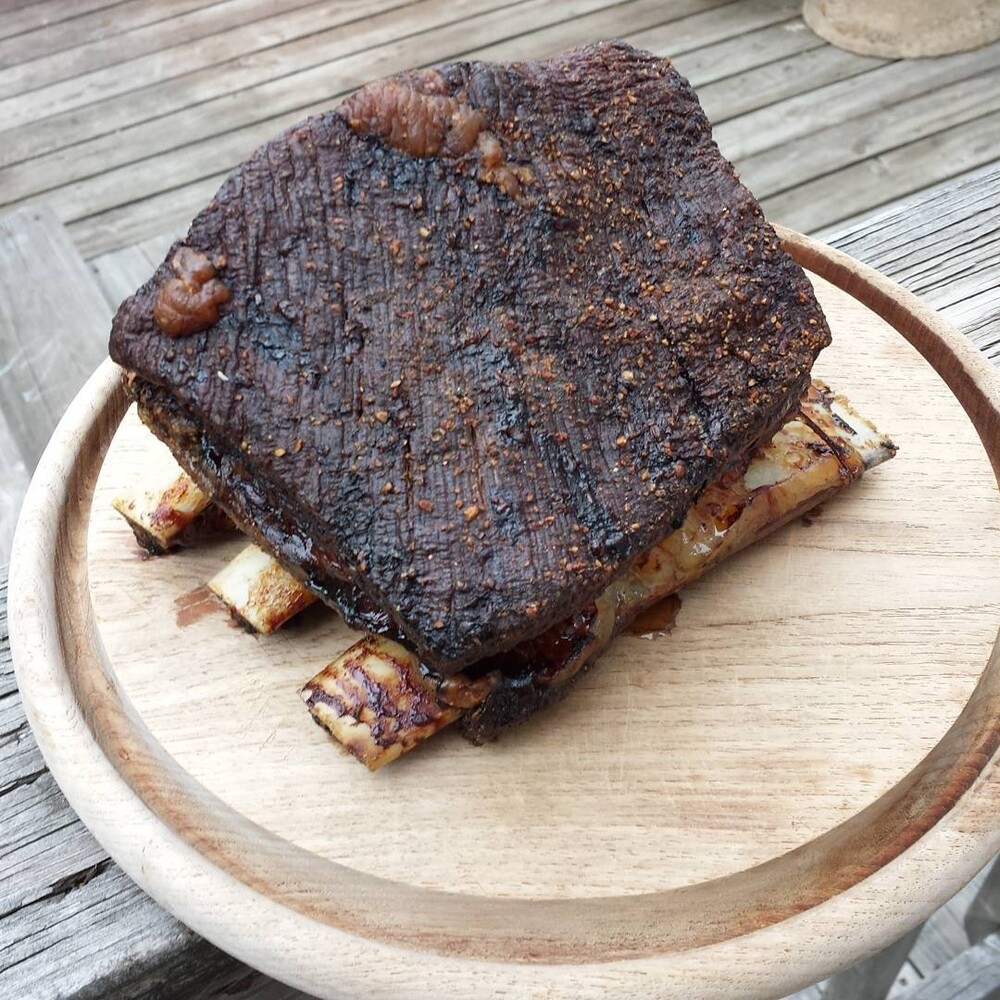
Plate short ribs carry enough fat and collagen to reward patience. A 250°F smoker sits inside the 225°F to 275°F low-and-slow range used for smoked short ribs, while the coarse seasoning builds the bark visible in our original photo. Keep the rack whole and cook by feel: the probe should meet almost no resistance between the bones.
What you need
- 1 whole 3-bone beef plate short rib, 5 to 7 pounds
- 2 tablespoons Diamond Crystal kosher salt (or 1 tablespoon plus 1 teaspoon Morton kosher salt)
- 2 tablespoons coarsely ground black pepper
- 1 tablespoon granulated garlic
- Oak, hickory, or pecan wood, as needed for the smoker
How to smoke beef plate short ribs
- Trim the rack. Trim only hard surface fat and any loose edges, leaving the rack whole. Pat the ribs dry.
- Season simply. Mix the salt, pepper, and granulated garlic. Season the meat side and edges evenly; the bone-side membrane does not need a heavy coating.
- Prepare the smoker. Heat the smoker to 250°F for indirect cooking. Add clean-burning oak, hickory, or pecan smoke.
- Build the bark. Place the ribs bone-side down and smoke with the lid closed. Maintain 225°F to 275°F, aiming for 250°F, and avoid opening the cooker more than necessary.
- Cook until probe-tender. Begin checking after 8 hours. Continue cooking until a thin probe slides into the thickest meat between the bones with very little resistance. This commonly happens around 200°F to 205°F, but tenderness—not a single number—is the finish line.
- Rest and slice. Rest the rack loosely tented for 45 to 60 minutes. Slice between the bones and serve without sauce, or offer sauce at the table.
Temperature and timing
USDA guidance gives 145°F plus a three-minute rest as the safe minimum for whole beef cuts. Barbecue short ribs are intentionally taken much higher for texture: connective tissue generally becomes tender when the meat is probe-soft, often around 200°F to 205°F. Use a thermometer for guidance and the probe test for doneness.
- Plan on 8 to 10 hours, but allow extra time; every rack and smoker behaves differently.
- If the bark is getting too dark before the meat is tender, wrap the rack in unwaxed butcher paper to finish.
- Keep leftovers refrigerated and reheat gently so the meat stays moist.
- Allergens: the core recipe is naturally free of dairy, eggs, wheat, soy, and nuts; check any packaged seasoning or sauce.
Recipe note: The 10-hour cook and finished photograph come from our May 2016 Instagram post. The quantities and detailed method were reconstructed and tested against current low-and-slow guidance from Weber. See the USDA safe temperature chart for food-safety guidance.
Free family cookbook
Bring Our Birch Island to your table.
Join our occasional notes and download Family Recipes, Volume One - our growing collection of recipes and cooking notes with family photography.
For another slow weekend cook, try our red wine beef osso buco, or browse all our family kitchen recipes.