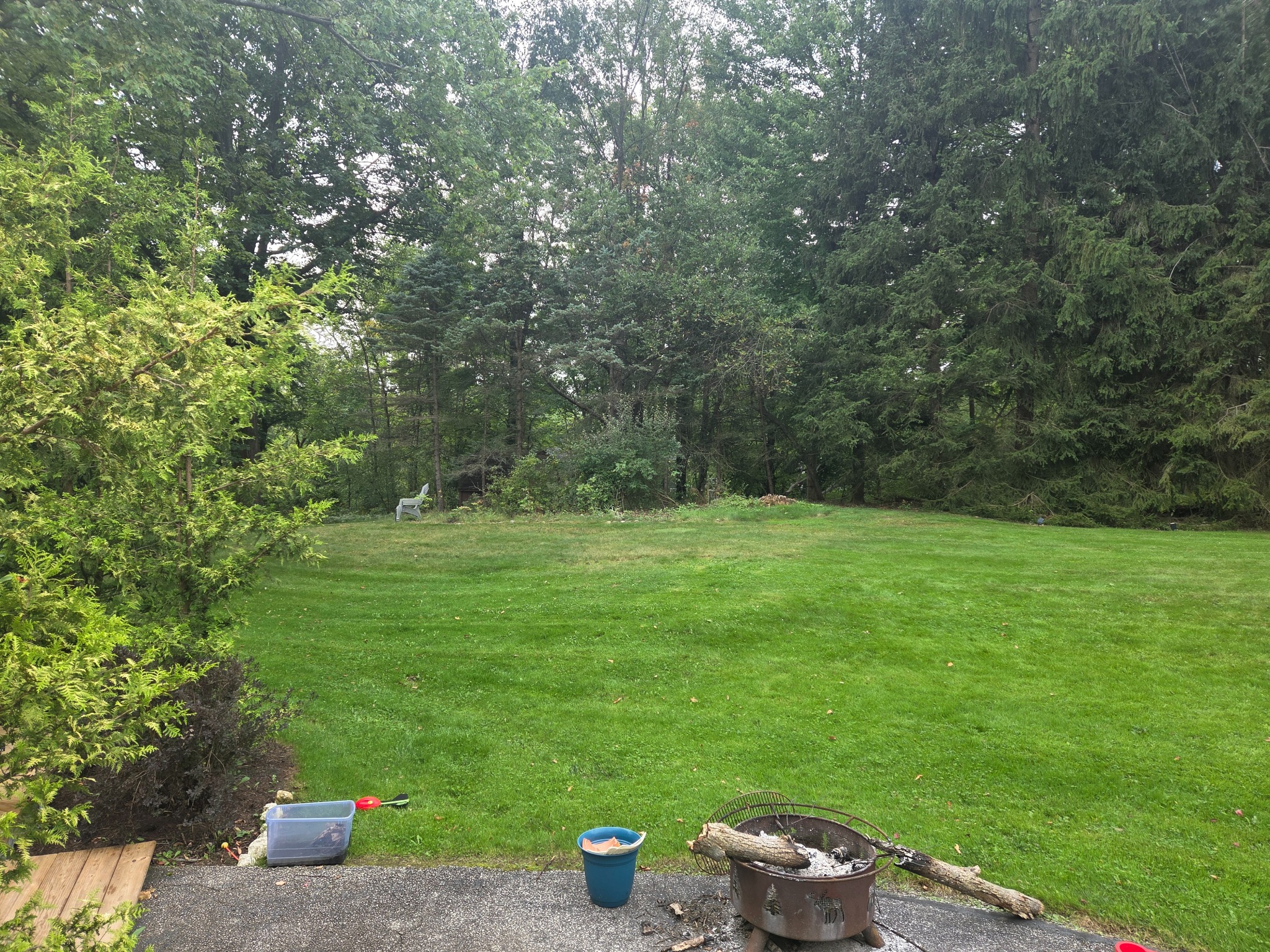
Our site: roughly 4–6 hours of filtered and direct light beside mature trees. We will match each plant to the actual moisture and light in its planting pocket instead of treating the entire border as one condition.
Ten natives on our shortlist
| Plant | Bloom | Moisture | Height | Wildlife value |
|---|---|---|---|---|
| Wild columbineAquilegia canadensis | Spring | Dry–medium | 1–2 ft | Hummingbirds and early pollinators |
| Woodland phloxPhlox divaricata | Spring | Medium | 1–1.5 ft | Early bees and butterflies |
| Wild geraniumGeranium maculatum | Spring | Medium | 1–2 ft | Native bees |
| Jacob’s ladderPolemonium reptans | Spring | Medium–moist | 1–1.5 ft | Early bees |
| Great blue lobeliaLobelia siphilitica | Late summer | Medium–moist | 2–3 ft | Bumblebees and hummingbirds |
| Cardinal flowerLobelia cardinalis | Late summer | Moist–wet | 2–4 ft | Hummingbirds |
| Zigzag goldenrodSolidago flexicaulis | Late summer–fall | Dry–medium | 2–3 ft | Late-season bees |
| Blue-stemmed goldenrodSolidago caesia | Fall | Dry–medium | 1.5–3 ft | Late-season bees |
| Bigleaf asterEurybia macrophylla | Late summer–fall | Dry–medium | 1–3 ft | Butterflies and bees |
| White snakerootAgeratina altissima | Late summer–fall | Medium | 2–4 ft | Late-season pollinators |
A border that blooms through the seasons
Low woodland layer
Repeat wild columbine, woodland phlox, wild geranium, and Jacob’s ladder near the path and gate. These plants give the border an established woodland feel before the taller summer plants fill out.
Color in the damp pockets
Use great blue lobelia where soil stays evenly moist. Reserve cardinal flower for the wettest spot; it is not a plant for a dry tree-root zone.
Late food for pollinators
Thread zigzag or blue-stemmed goldenrod through bigleaf aster and white snakeroot so the garden still has flowers after the vegetable beds begin winding down.
Our proposed layout
- Path edge: groups of three woodland phlox, wild geranium, and Jacob’s ladder, spaced about 12–18 inches apart.
- Fence corners: taller groups of great blue lobelia, zigzag goldenrod, and white snakeroot, generally 18–24 inches apart.
- Wet pocket: a small drift of cardinal flower only where the soil proves consistently moist.
- Woodland transition: bigleaf aster and blue-stemmed goldenrod in repeating groups rather than isolated single plants.
We will leave a clear maintenance strip outside the vegetable fence. Mature perennials should soften the fence without leaning into the gate, blocking airflow, or making wildlife damage harder to spot.
Dry side versus moist side
Start here
Wild columbine, wild geranium, zigzag goldenrod, blue-stemmed goldenrod, and bigleaf aster.
Use selectively
Woodland phlox, Jacob’s ladder, great blue lobelia, cardinal flower, and white snakeroot.
What about deer?
No native perennial is deer-proof, especially beside a wooded corridor. Aromatic or less-palatable plants may be browsed less often, but young growth can still be sampled. We will protect new plugs with the vegetable-garden fence where practical, use temporary cages on exposed groups, and avoid buying large quantities until we learn what local deer prefer.
Realistic first-year budget
| Item | Planning range |
|---|---|
| 18–24 native plugs or small pots | $110–$240 |
| Compost for planting pockets | $20–$45 |
| Leaf mulch or shredded hardwood mulch | $25–$60 |
| Labels, stakes and temporary protection | $15–$35 |
| Likely total | $170–$380 |
Buying plugs and repeating fewer species should create a more natural result for less money than buying one large specimen of everything. We can plant the highest-priority groups first and expand them as the garden teaches us which areas are truly dry, moist, bright, or heavily browsed.
How we will shop responsibly
- Confirm the full botanical name, not just a similar common name.
- Ask whether plants were nursery-propagated rather than collected from the wild.
- Avoid cultivars when the straight native species is available and fits the site.
- Buy from regional native-plant nurseries and local conservation sales.
- Never dig wildflowers from parks, preserves, roadsides, or private land without permission.
Useful Northeast Ohio references
- Audubon Society of Greater Cleveland: native plants for birds and pollinators
- Nature in My Backyard: Northeast Ohio native-plant resources
- Ohio Native Plants: planting a pollinator garden
- National Wildlife Federation: ZIP-code native plant finder
Affiliate note: This page does not currently contain paid affiliate links. If links are added later, we may earn a commission at no additional cost to the reader. Recommendations will reflect the plants and supplies we actually choose or carefully evaluate.