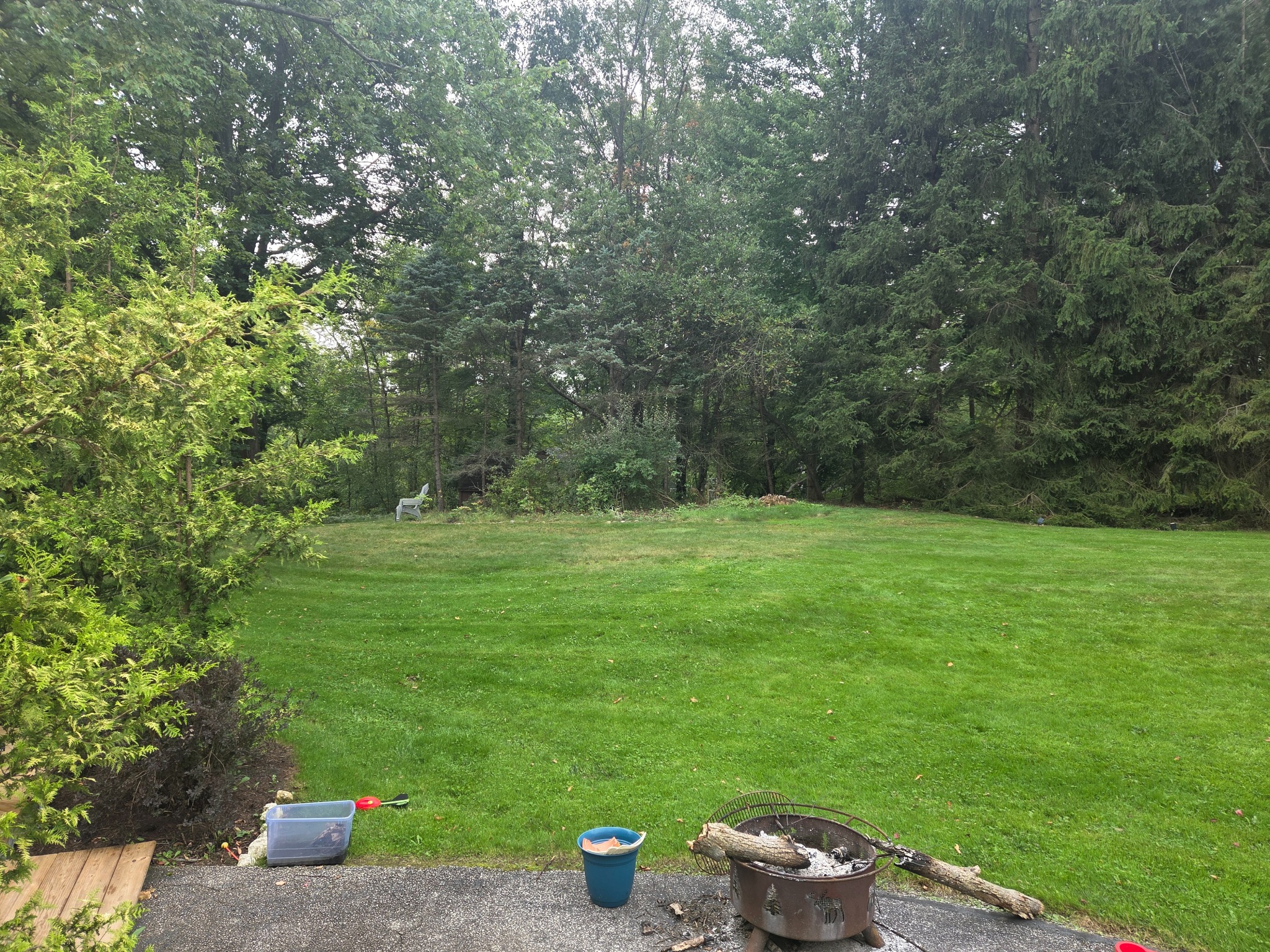
A layered fence, not one perfect mesh
Use a permitted deer barrier for height, durable wire on the lower 24–36 inches, smaller openings at the bottom where rabbit pressure is high, and a secured ground edge where groundhogs are active. Build the gate with the same protection.
What each animal changes
- Deer: height and visibility matter. Under heavy pressure, extension guidance commonly recommends substantial fencing around 8 feet high; shorter designs may require depth, angled sections, or a second visual barrier.
- Rabbits: the lower openings matter more than overall height. Small rabbits can pass through openings that easily stop a groundhog.
- Groundhogs: a vertical fence alone may not be enough because they can dig. A buried or outward-facing apron, securely anchored, is more useful than loose mesh at the soil line.
Before choosing height: confirm local fence rules, setbacks, and neighborhood restrictions. Contact Ohio 811 before digging any post holes, and consider private lines that the public locate process may not mark.
Fence-material comparison
| Material | Best for | Strengths | Tradeoffs | Cost |
|---|---|---|---|---|
| Poly deer mesh | Deer | Lightweight, less visible, easier to install | Can sag, tear, or become hard to see; quality varies | $ |
| Woven or welded wire | Deer and larger animals | Durable, visible, handles weather well | Heavy, costlier, needs solid posts | $$$ |
| 2×4 welded wire | Groundhogs and general barrier | Rigid and durable near ground level | Openings do not stop small rabbits | $$ |
| 1-inch poultry/rabbit wire | Rabbits | Flexible and relatively affordable | Lighter wire can deform or rust | $ |
| ½-inch hardware cloth | Small rabbits and rodents | Strong small openings; useful at the bottom | Expensive for full-height coverage | $$$ |
Three systems worth considering
Layered perimeter
Tall deer mesh or wire above a rigid lower barrier, with smaller mesh at the bottom and a protected ground edge.
Best for: mixed wildlife pressure and a permanent family garden.All-metal system
Heavy woven or welded wire on braced wood or metal posts, plus a framed gate and small-mesh lower section.
Best for: exposed sites, winter durability, and long service life.Double fence
Two shorter barriers separated by several feet can discourage deer that are reluctant to jump a wide obstacle.
Best for: sites where a tall fence is not permitted and enough space exists inside the 20×10 footprint.Our proposed 20×10-foot configuration
- Perimeter: approximately 60 linear feet before allowing for the gate and overlap.
- Posts: strong corner and gate posts, with intermediate supports sized to the selected mesh and snow exposure.
- Lower layer: rigid wire for the first 24–36 inches; add smaller mesh where young rabbits are a demonstrated problem.
- Upper layer: deer barrier brought to the locally permitted and practically effective height.
- Ground edge: secure with landscape staples or wire anchors; use a buried or outward apron only after utilities and roots are understood.
- Gate: wheelbarrow width, diagonal bracing, two sturdy hinges, a positive latch, and no unprotected gap at the bottom.
Post choices
Best for the gate and corners
Easy to frame, brace, and attach hardware to. Choose ground-contact-rated material and keep cut ends and fastener compatibility in mind.
Best for intermediate support
Fast and durable where digging conditions allow, but less convenient for a finished gate and potentially sharp around children unless capped.
Winter and snow-load considerations
- Avoid creating loose mesh that a snow shovel, branch, or animal can pull down.
- Keep the barrier visible near walking areas to reduce accidental collisions.
- Brace corners and the latch side of the gate rather than depending on mesh tension.
- Remove fallen branches promptly and inspect ties after freeze-thaw cycles.
- Leave enough clearance to manage snow without piling it against the fence.
- Use galvanized or exterior-rated wire, fasteners, hinges, and latches.
Estimated DIY budget
| Component | Planning range |
|---|---|
| Upper deer barrier | $90–$220 |
| Lower welded wire or hardware cloth | $80–$220 |
| Posts, braces and fasteners | $120–$260 |
| DIY gate, hinges and latch | $60–$150 |
| Ground apron, anchors and repair allowance | $30–$90 |
| Likely total | $380–$940 |
The range is intentionally wide. Post type, fence height, metal gauge, gate construction, delivery, and whether we need a digging apron will matter more than small differences between retailers. We will update this page with actual receipts and the final configuration.
What we would buy first
- Measure the final fence line and gate opening.
- Confirm local height rules and complete the utility locate process.
- Choose the deer strategy before buying posts.
- Buy the gate hardware and strongest posts first.
- Select the lower barrier based on animals actually observed.
- Order upper mesh, ties, anchors, and a repair allowance last.
Useful references
- Utah State University Extension: substantial wildlife fencing and rabbit exclusion
- Utah State University Extension: fencing under heavy deer pressure
- Ohio 811: contact before digging fence-post holes
Affiliate note: This article does not currently contain paid affiliate links. If links are added later, we may earn a commission at no additional cost to the reader. We will recommend only systems we use or carefully evaluate.