
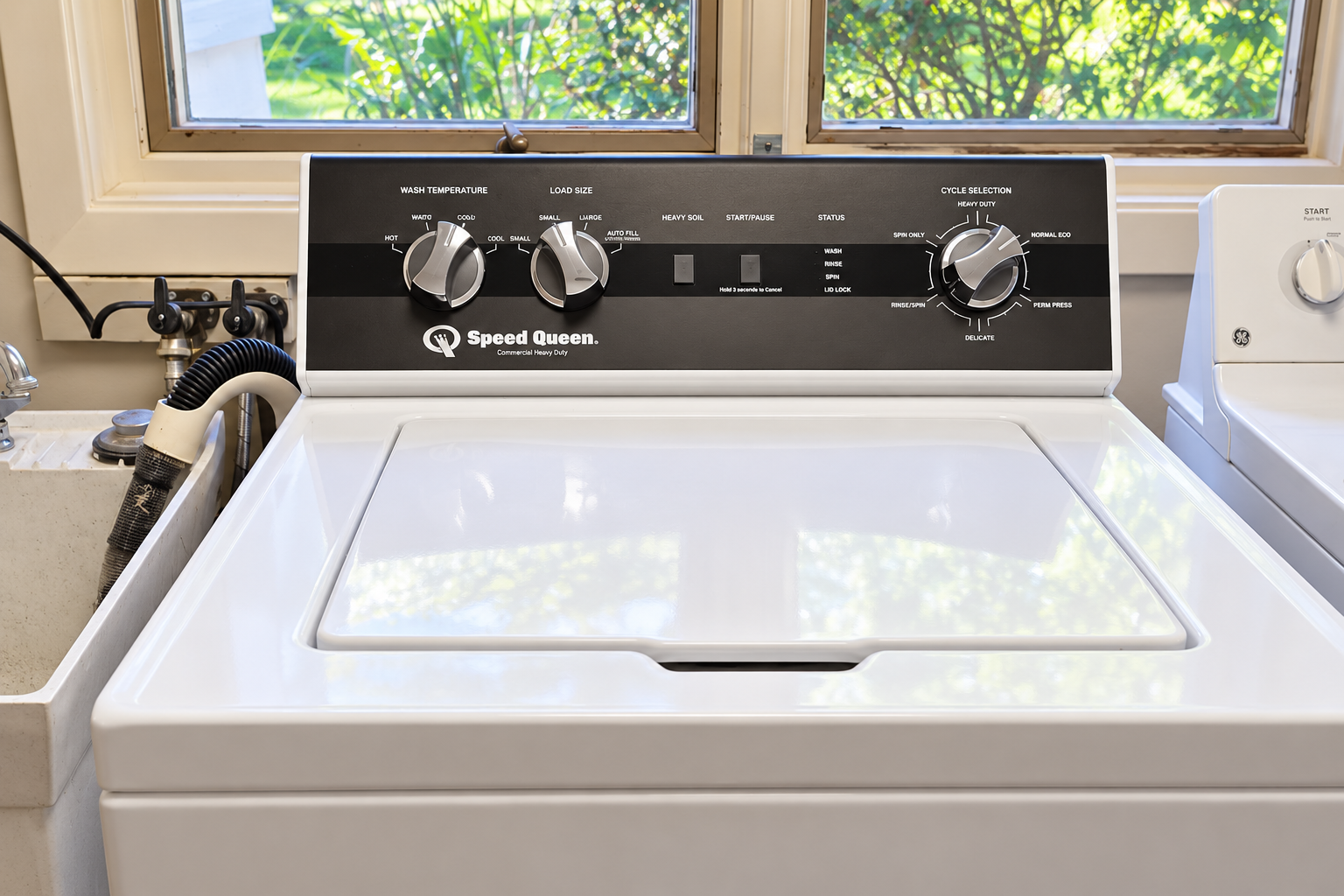
When we bought our new Speed Queen washing machine, we expected cleaner clothes and fewer laundry problems. Instead, we noticed a strong, unpleasant odor during the first wash of the day.
The smell did not last through the entire cycle. It appeared when the Speed Queen drained for the first time, then disappeared. Later loads usually seemed normal. Because the washer was new, we initially wondered whether the odor came from the machine, the drain hose, or the plumbing.
After having a repairman inspect the washer, we learned that the explanation was surprisingly simple: the machine does not remove every drop of water when a cycle ends.
The clue was when the odor appeared
Timing helped us narrow down the problem. The odor was strongest during the first draining cycle of the first load of the day. It was not simply a musty smell inside the open tub, and it did not continue every time the washer drained.
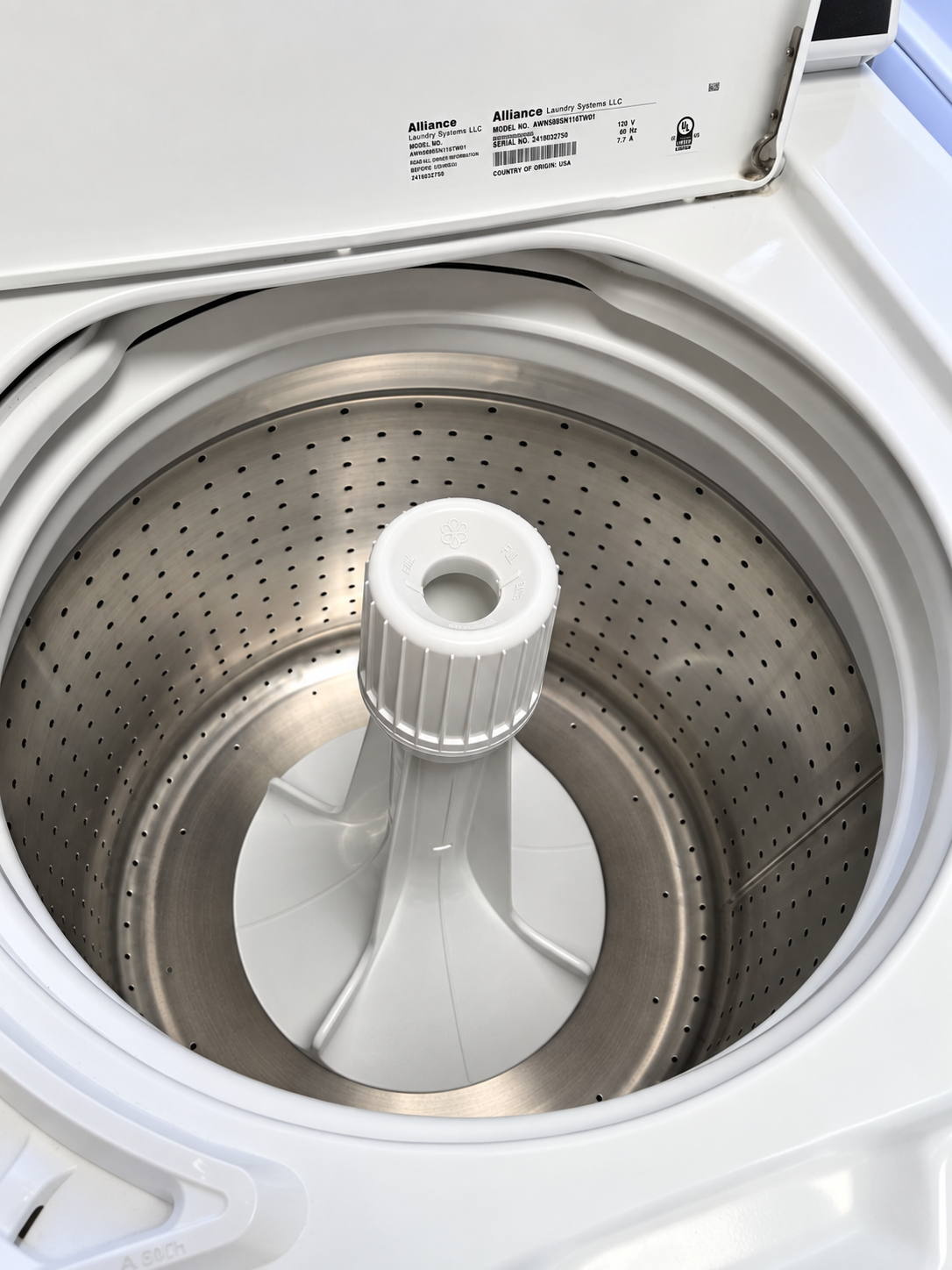
The repairman explained that a small amount of water normally remains below the visible wash basket and in parts of the pump or drain system. You may not see it when you look into the empty tub, but that does not mean the Speed Queen is completely dry.
If the machine sits unused overnight, that residual water can develop an odor. The next morning, the first drain pushes it out through the hose, which is why the smell can suddenly become noticeable near the utility sink or standpipe.
What the Speed Queen repairman told us to do
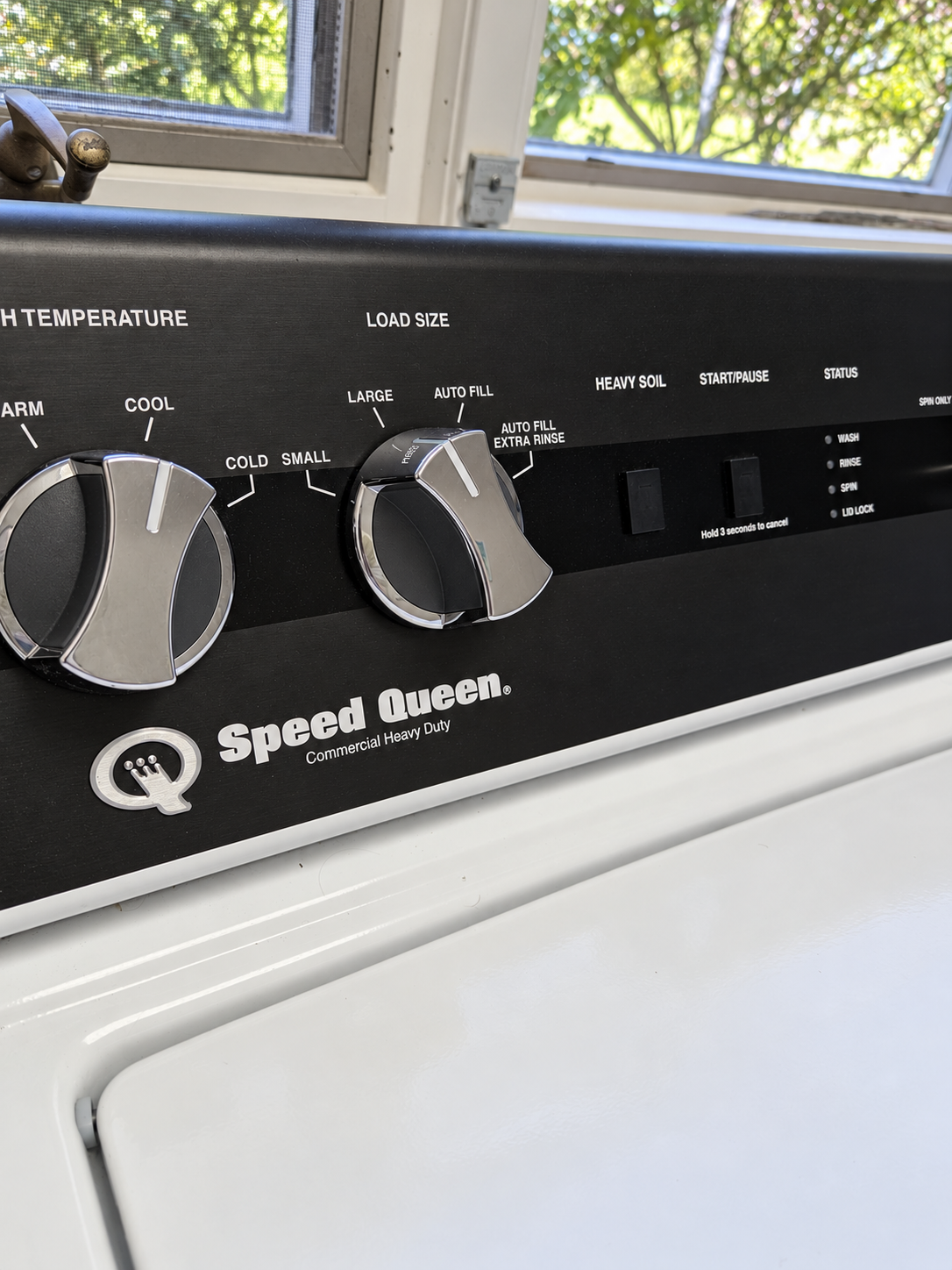
The repairman recommended running a deep cleaning cycle with no clothing in the washer. These are the exact settings and steps we used:
- Set the wash temperature to Hot.
- Set the load size to Large.
- Select Heavy Soil.
- Choose the Heavy Duty cycle.
- Add vinegar to the wash water.
- Allow the Speed Queen tub to fill.
- Pause or stop the machine after it fills.
- Let the hot vinegar solution soak overnight.
- The next morning, resume the cycle and allow it to run completely.
Important: This is the procedure our repairman recommended for our Speed Queen. Check your own appliance manual or contact the manufacturer before using vinegar, because cleaning guidance can vary by model.
Why an empty-looking washer can still hold water
An empty wash basket can be misleading. The visible stainless-steel tub is only one part of the washer's water system. Water also travels through an outer tub, pump, internal hoses, and drain line.
Most washers retain a small amount of water in these lower components after a cycle. Under ordinary conditions, that small amount is not noticeable. If it sits long enough or picks up residue, however, the first discharge after a period of inactivity may smell.
Other places worth checking
Although the overnight cleaning cycle solved our problem, a first-drain odor can have more than one source. It is also worth checking:
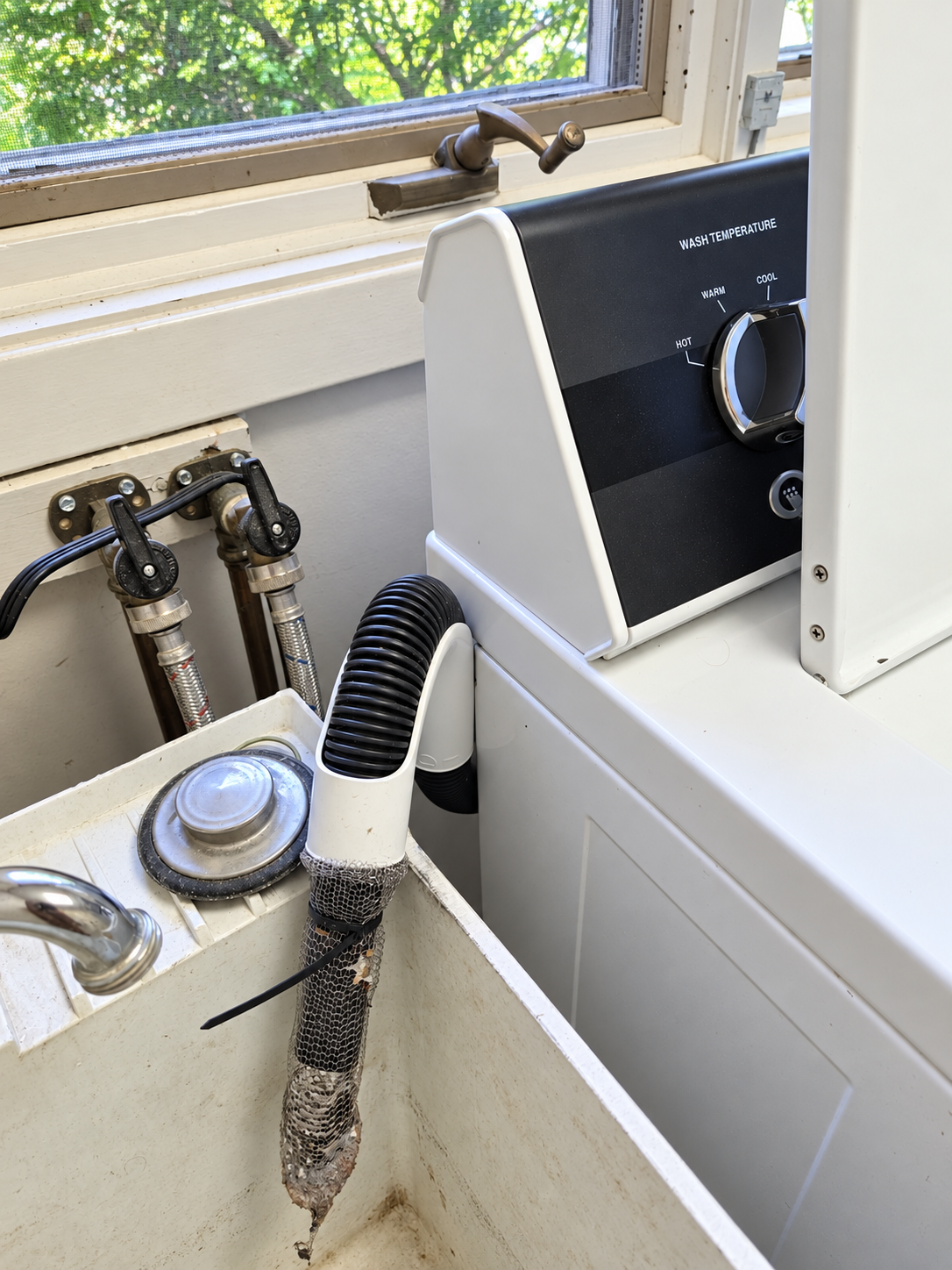
- The drain hose: Make sure it is not kinked, clogged, or installed incorrectly.
- The utility sink or standpipe: Built-up residue in the household drain may smell when wash water first enters it.
- The washer lid: Leaving it open between loads helps moisture evaporate.
- Detergent use: Too much detergent can leave residue that traps soil and encourages odors.
- The installation: Confirm that the drain hose and plumbing follow Speed Queen's instructions.
Never mix vinegar and bleach
Never combine vinegar with chlorine bleach. Mixing acids and chlorine bleach can release dangerous chlorine gas. Use one cleaning product at a time, keep the area ventilated, and follow the appliance and product instructions.
What we learned
The most confusing part was that our Speed Queen was brand new and looked completely empty after every load. Once we understood that a small amount of water remains out of sight, the first-drain smell finally made sense.
For us, the solution was a hot, large, Heavy Soil, Heavy Duty cycle with vinegar, paused after filling and left to soak overnight before completing the wash cycle. That deep flush removed the odor-producing water and residue hiding below the basket.
If your washer smells only during the first drain of the day, residual water may be the reason. Document exactly when the smell occurs, check the drain setup, and consult the manufacturer or a repair professional before trying a cleaning treatment.
The Pinterest graphics use our original Speed Queen photographs with AI-assisted lighting, cleanup, layout, and typography.
Affiliate note: This article is based on our own washer and repair experience and does not currently contain paid affiliate links.