
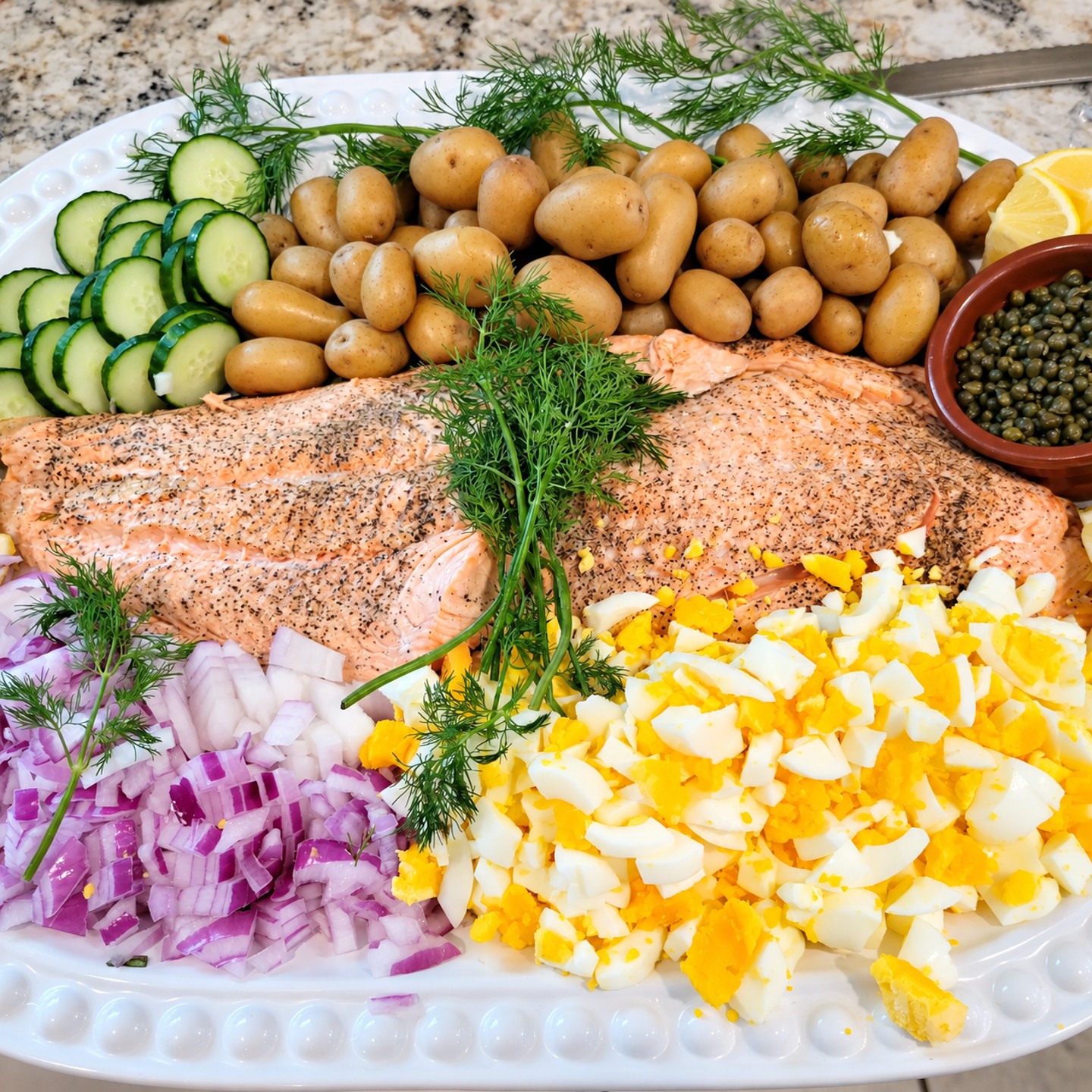
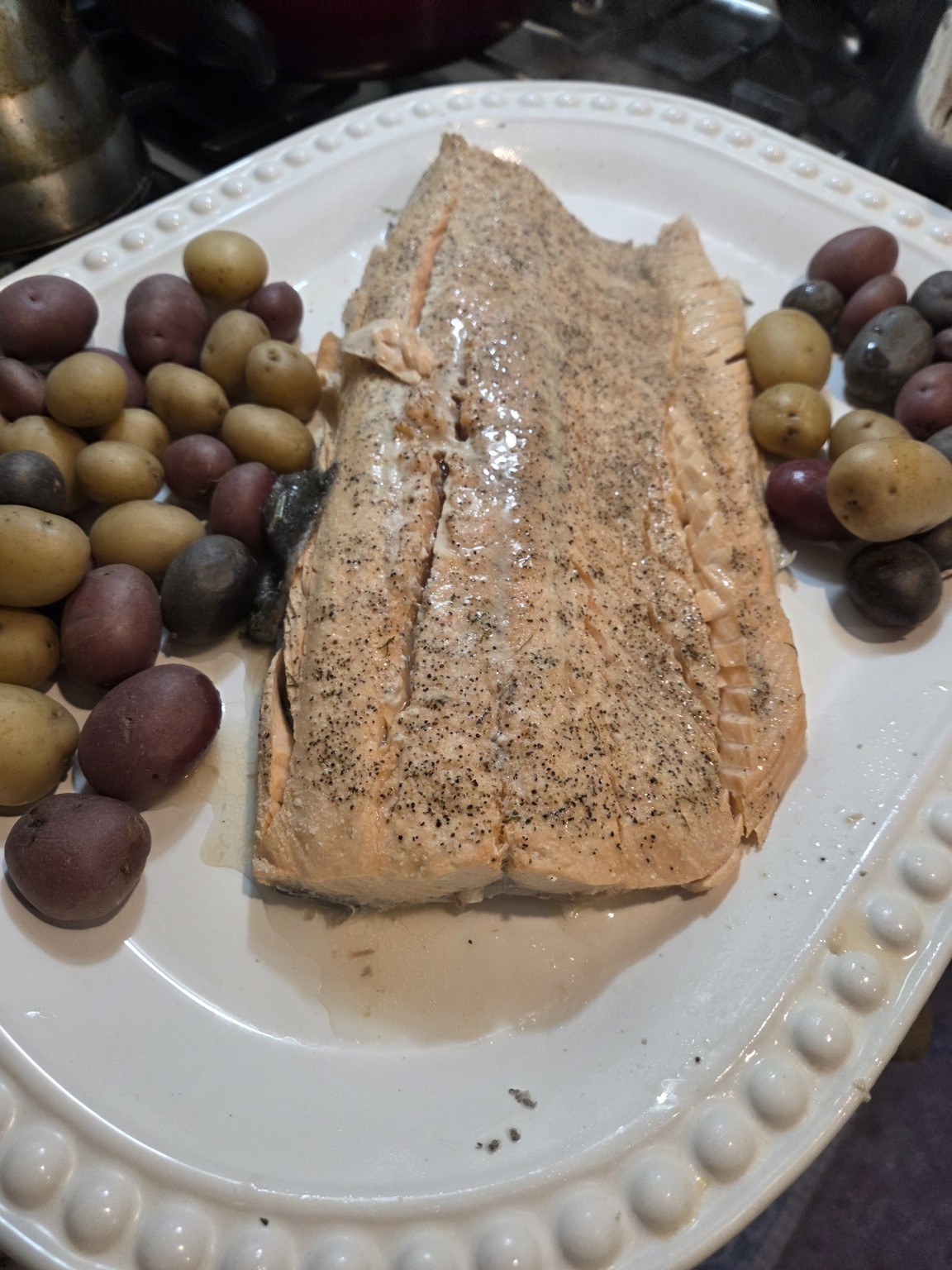
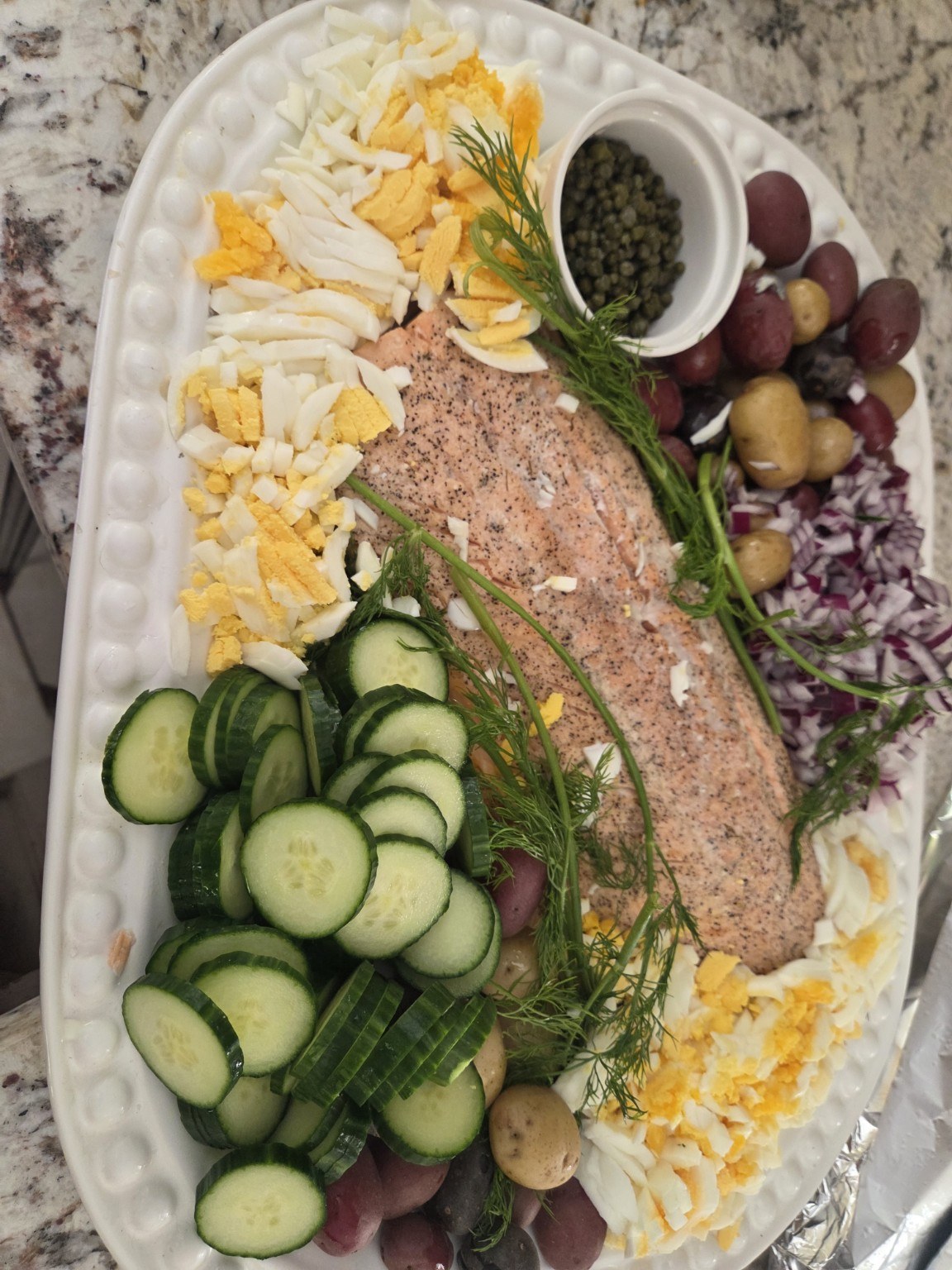
We shared this platter on Instagram with two simple tags: poached salmon and poached salmon platter. The picture tells the rest of the story: one generous piece of fish, a heap of small potatoes, and bright toppings arranged around the edges.
The appeal is in the serving. Keep the toppings separate so a plate can be lemony and briny, piled with dill, or kept simple with salmon and potatoes. It makes a useful centerpiece for a family lunch or a relaxed dinner.
What is on the platter?
- Poached salmon: the centerpiece, seasoned with visible black pepper.
- Baby potatoes and cucumber: something substantial beside something crisp.
- Chopped egg and red onion: two separate toppings at the front of the platter.
- Dill, lemon, and capers: fresh herbs, citrus, and a briny finish.
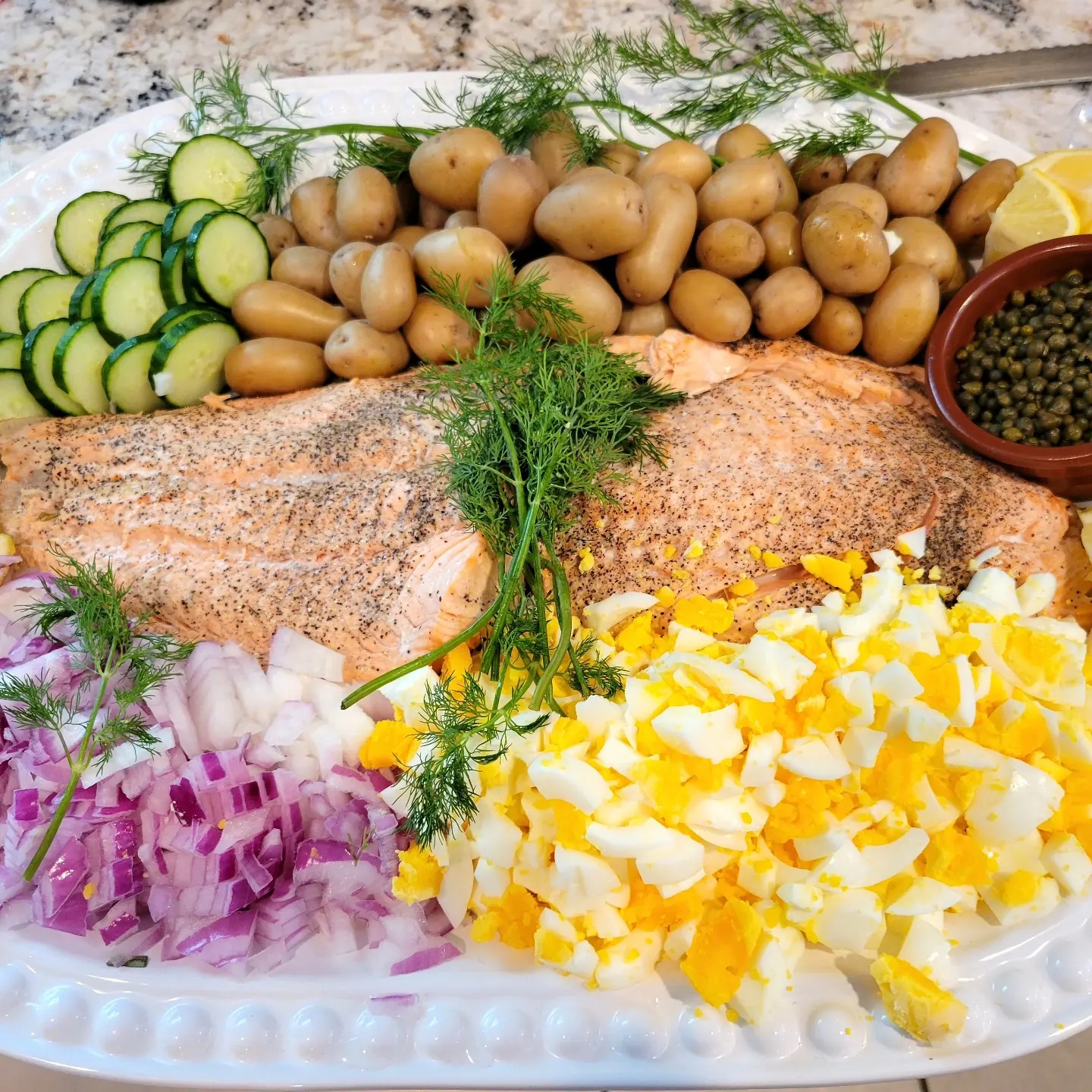
From the fillet to the family platter
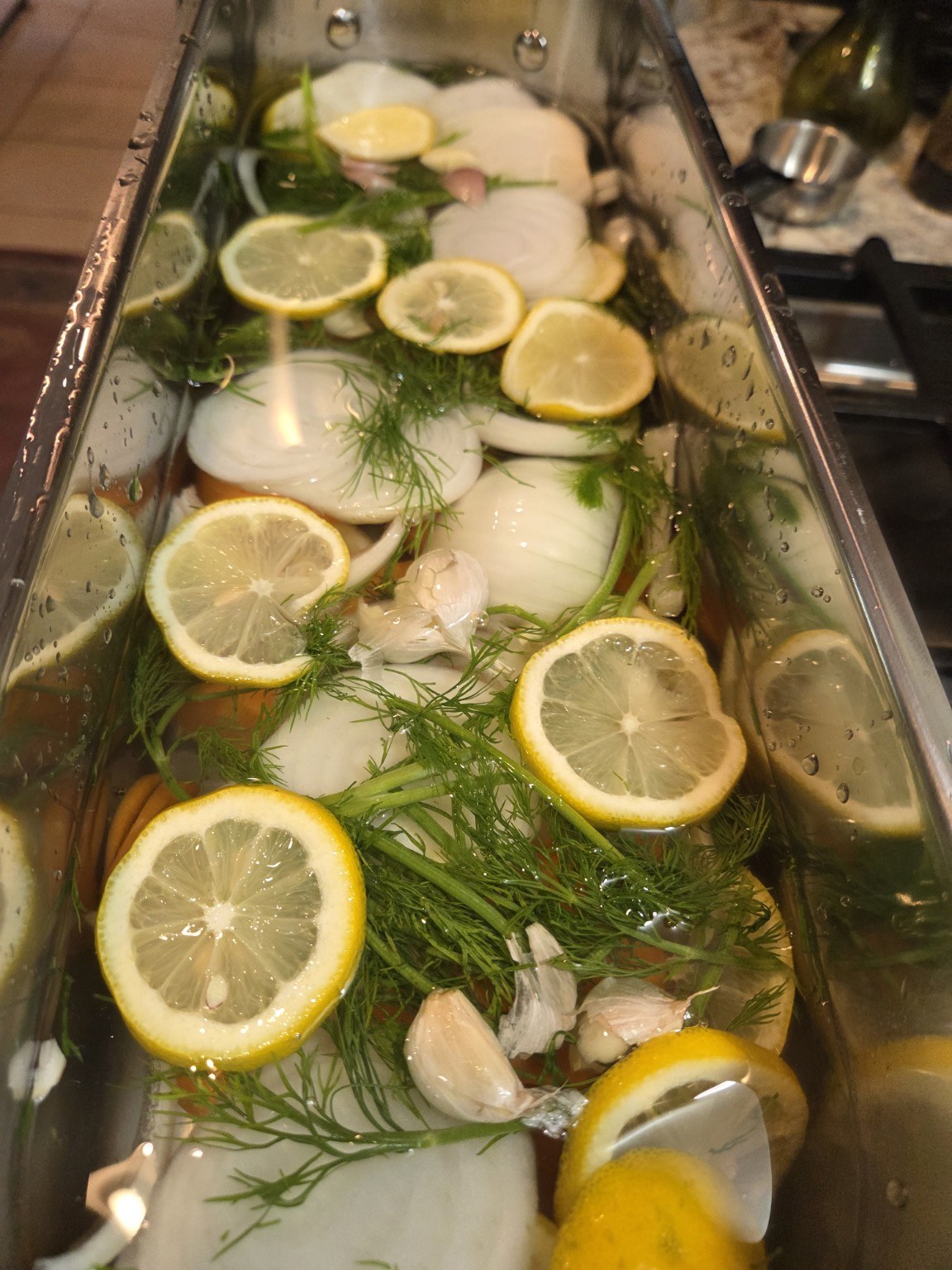
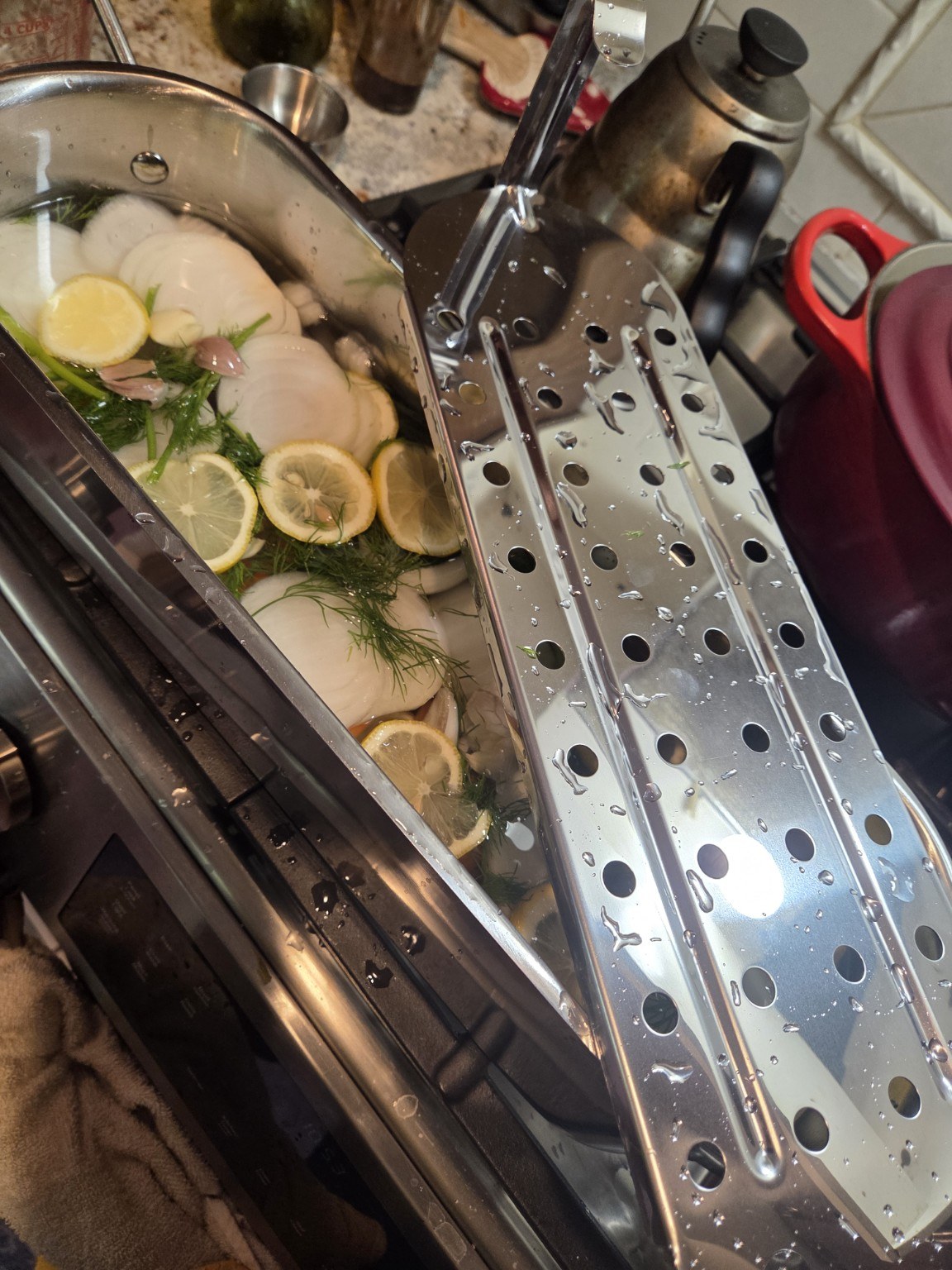
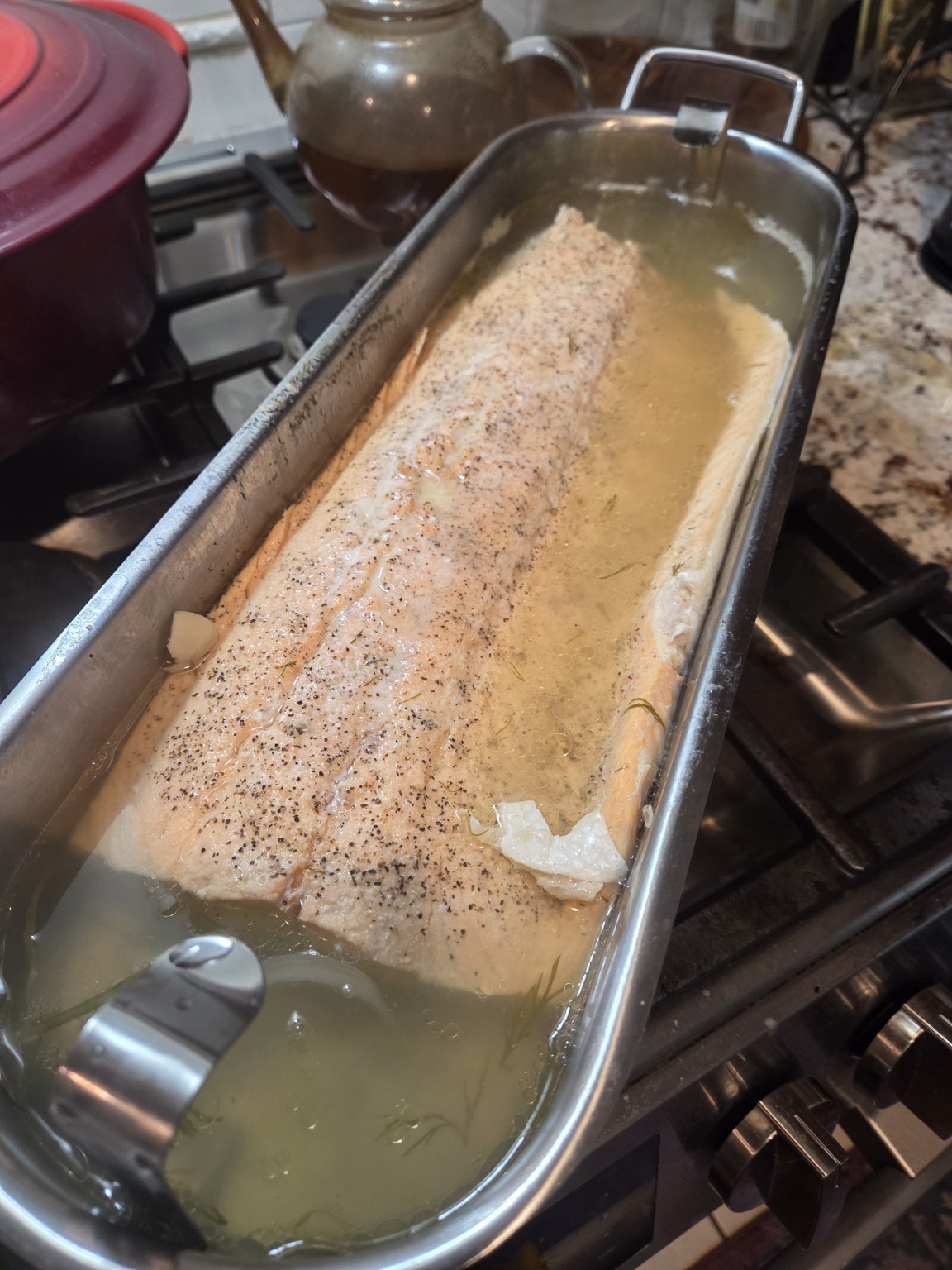
These extra photos from our kitchen show the preparation, the aromatic poaching liquid, and the platter coming together. The lemon, onion, garlic and dill are visible in the poacher; the suggested recipe below remains a guide for four servings.
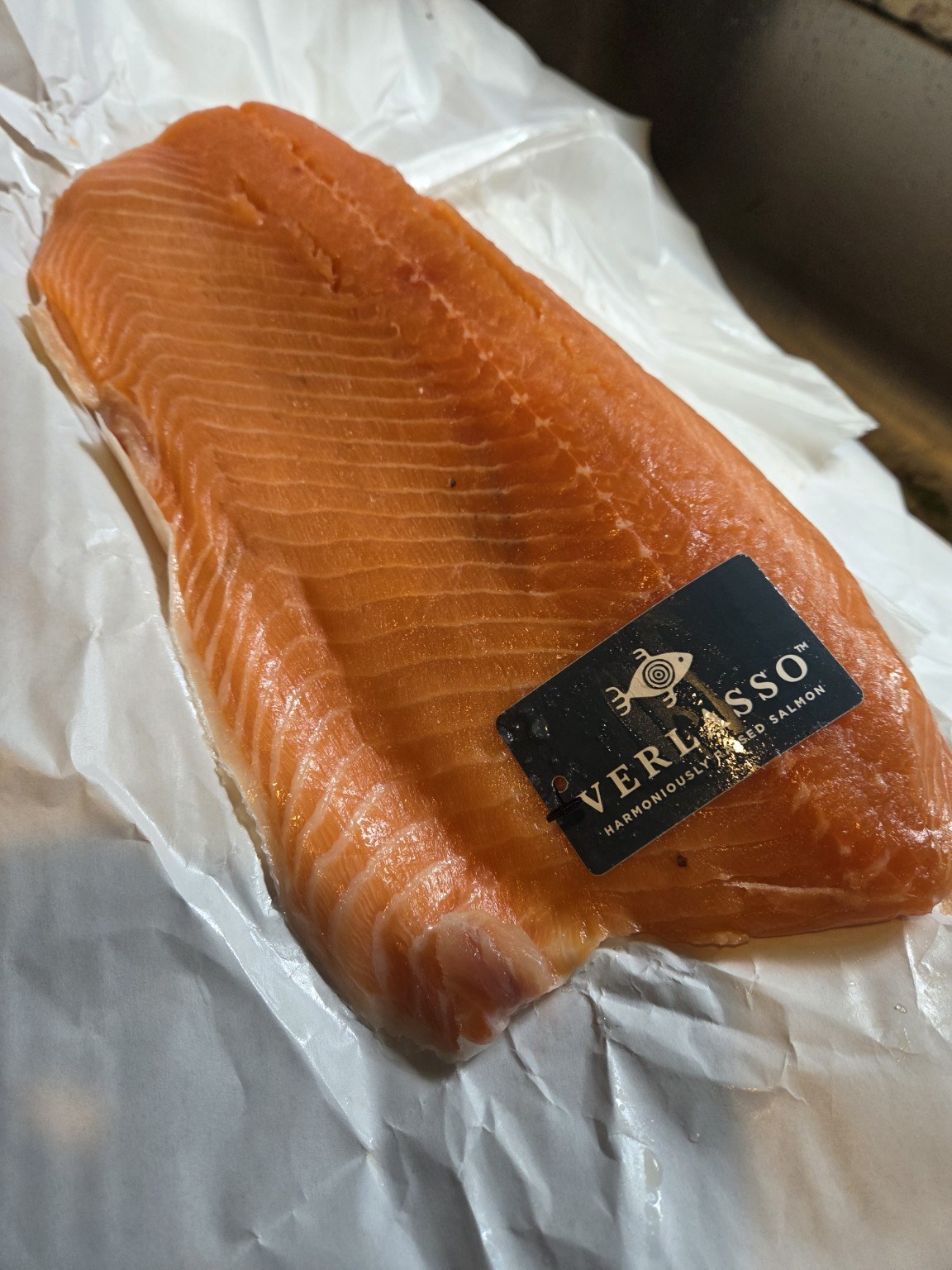
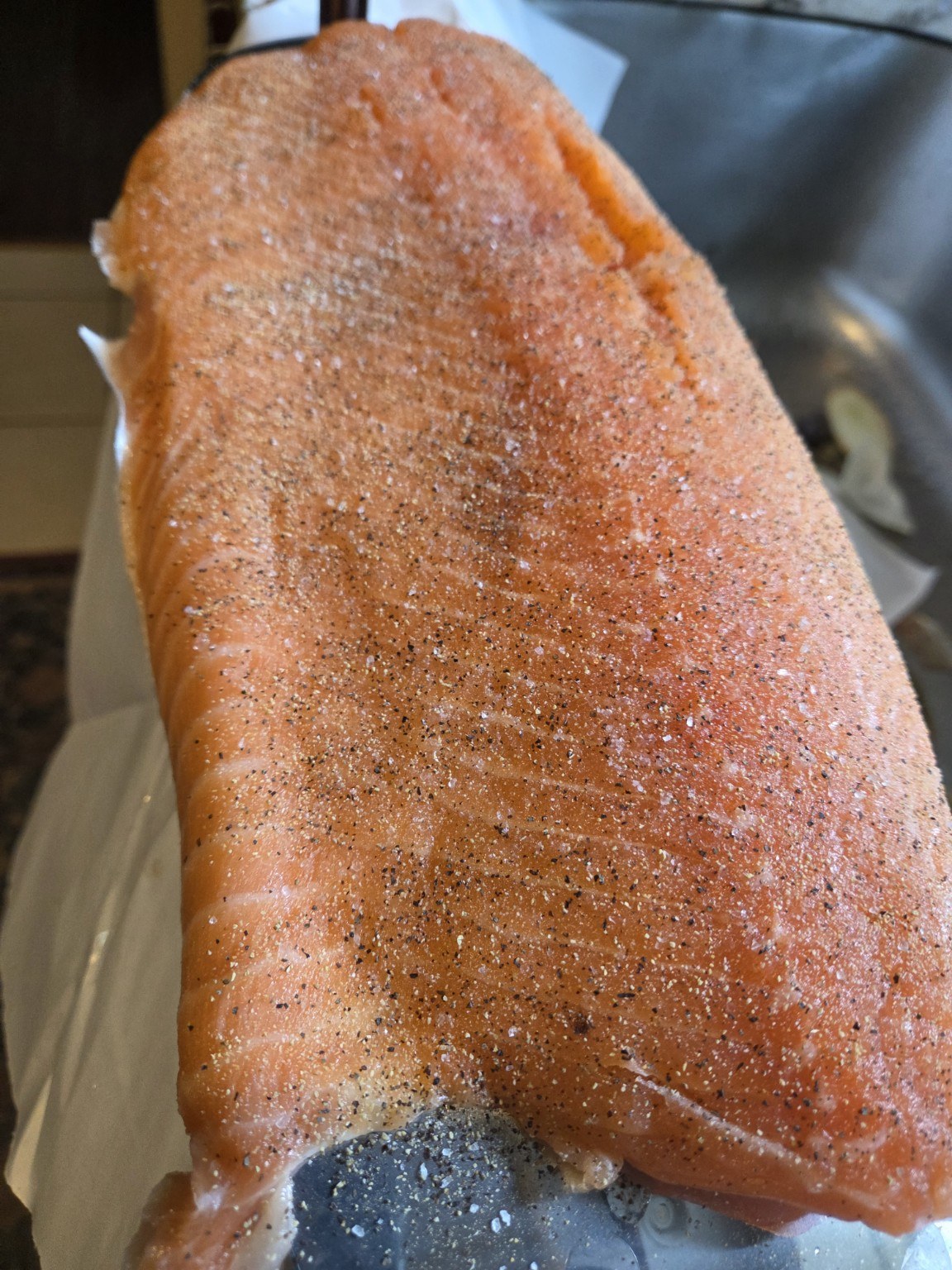
A suggested version for four
The original post did not record quantities or a cooking method. The amounts and steps below are a practical suggested version inspired by the photographed dish, rather than a claim about exactly how the 2023 platter was made.
Equipment: a wide covered pan, a saucepan, a food thermometer, a wide spatula, and a large serving platter.
Ingredients
- 1½ pounds salmon fillet, cut into portions if needed to fit your pan
- 1 pound baby potatoes
- 3 large eggs
- 1 cucumber, thinly sliced
- ½ small red onion, finely chopped
- 1 lemon, half sliced and half cut into wedges
- ¼ cup drained capers
- A small bunch of fresh dill
- Water to cover the salmon; salt and black pepper to taste
How to bring it together
- Cook the potatoes in lightly salted water until a knife enters easily, roughly 15–20 minutes depending on size. Drain. Hard-cook the eggs until yolks and whites are firm, then cool, peel, and chop.
- Put the salmon in a wide pan with lemon slices and a few dill stems. Add enough water to cover it. Bring the liquid to a gentle simmer, then reduce the heat to keep it barely bubbling. Cover and cook until the thickest part reaches 145°F on a food thermometer. Begin checking after about 8 minutes; thickness matters more than the clock.
- Lift the cooked salmon onto a clean platter using a wide spatula. Remove any pin bones you find. Season to taste with salt and pepper.
- Arrange the potatoes and cucumber alongside the salmon. Add separate piles of chopped egg and red onion, a small bowl of capers, lemon wedges, and fresh dill. Let everyone choose their own toppings.
Serving and make-ahead notes
Serve the salmon warm, or refrigerate it promptly and serve chilled. Keep cucumber, onion, capers, and lemon separate until you assemble the platter. Halve larger potatoes so the pieces are easy to serve. If raw onion tastes too sharp, use less and let diners add it themselves.
For a smaller table, halve the suggested quantities. For a larger gathering, use several smaller platters and replenish them from the refrigerator rather than leaving all the food out at once.
Food safety: FDA guidance recommends cooking seafood to 145°F and keeping refrigerated food at 40°F or below. Refrigerate perishables promptly; do not leave them out for more than two hours, or one hour above 90°F. Keep raw fish and its utensils separate from ready-to-eat toppings. Read the FDA seafood guidance.
Allergens: fish and egg. Check any purchased additions for their own allergen information.
Free family cookbook
Bring Our Birch Island to your table.
Join our occasional notes and download Family Recipes, Volume One - our growing collection of recipes and cooking notes with family photography.
Try our Caprese sandwich and white-bean salad for another lunch idea, or browse the family recipe collection.